sound & SILENCE

a unique approach to music lessons for children and beginning adults


May all humanity
have a safe place to sleep
Shelter and a bed, a pillow under head
And some quiet, so you may sleep
Peacefully

My next performance will be on April 7th
In the Chapel Performance Space in Wallingford
If you'd like more information
Please write to me at jay at soundand.com
and I will add you to the mailing list.


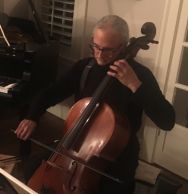
Solstice 2011-Cello
To hear this file and the other music files lower on this page may need to be downloaded, shift and right-click with Windows or option-click with Macintosh


Table of Contents


What do I teach?
Introduction
Some Rules and a little Philosophy about practicing
Group Lessons
What is a lesson like?
What do I charge?
Who I am
Links to resources I can recommend
My Trip in Turkey 2006
My 2nd Turkey trip 2008


Instruction in listening, playing, instrument building,and composing. Emphasis on all aspects of the world of music and on the musics of the world.
Specializing in children and beginning adults. Ages 3-adult

In the Leschi/Mt. Baker (Seattle) neighborhood, Private individual lessons in piano, clarinet, saxophone, cello, string bass, bass guitar, guitar (basic chords, fingerstyle, classical), percussion, theory and composition.
Group lessons for children 3-7.

Lesson times are weekday afternoons, weekend mornings, and early evenings.

For further information call
Jay Hamilton
206-328-7694
or email
musiclessons
@
soundand.com


Parents often ask, “What instrument should my child begin with?”

The best answer is: The one that your child is most interested in playing.


Many times, because of limited exposure, your child will not know what options are available in the world of musical instruments.
I offer exposure to a great variety of musical instruments, styles, and experiences, which can help the students choose their own musical direction.
In each lesson we explore the world of sound, both traditional and non- traditional, and investigate how we can create music from what we discover.
During the lesson I emphasize listening: to the sounds around us, to the music on the radio or stereo, to whatever gives us pleasure.
We work on rhythm through drumming, clapping, singing, writing, and reading everything from hand drums to the pots and pans in the kitchen.
Dexterity increases by playing string and keyboard instruments: wooden and metal xylophones and string instruments from the piano to dulcimers to Chinese style kotos.
Ear training and breath control are developed by singing and playing wind instruments, from bird calls and soda straws, to flutes and whistles from around the world.
In private lessons for a specific instrument or musical skill, I use many of the above activities. The goal is to be a well-rounded musician who will enjoy all varieties of musical experiences for the rest of our lives.


sound & SILENCE
A unique approach to music lessons, specializing in children and beginning adults

For further information call
Jay Hamilton
206-328-7694
or email
musiclessons
@
soundand.com


Back to the Table of Contents

or ctrl[cmd]+home


Some Rules and a little Philosophy about practicing

Practice at a scheduled time, one agreed upon by the entire family, and in the same place EVERYDAY
When you practice, do one of the following for at least 15 minutes before changing to a different one;
Listen to one song over and over again
Play your instrument- practice the music of your lesson-PLAY IT FOR FUN TOO!!!
Make a new instrument
Write a piece of music for one of your instruments
Read a story about a musician (singer, performer, composer)
Go to a concert ( a musical, symphony, chamber music, opera, choral, rock-n-roll) or watch and listen to one on the TV/Video

*Practicing is something we learn how to do.

*It does not come naturally or easily- though it can be fun/involving/ compelling, often that is not the case- practicing is work.

*To plant the seeds of the idea that practicing is something that we do, and that it can become natural, it is very important that Mental, Emotional, and Physical space be created for each student so that they can practice. To this end a family decision on the time and place that practicing occurs is very important. This tells the student that everyone understands that their musical activity is important (AND DIFFICULT!) and that they will be supported while doing it.

*Keeping the time and place the same each day makes this easier.

*No less important is keeping the distractions to a minimum.

*Everyone must agree that the practicing comes first and that bothering the student is to be avoided if at all possible.

*This is hardest and most important when there are siblings.

Back to the Table of Contents

or ctrl[cmd]+home

What are groups?

I teach young children in groups. There are 4-6 children in a group and the way I think about these groups is that they are a good way to introduce the musical concepts of rhythm, listening/ playing together, and they get hands on experience of all the different types of musical [and some not so musical] instruments.
For me the point of a group of young children is to prepare them for a musical life IF that is what they want. After a few years they will know how to read music in a rudimentary way and they will know what instrument attracts them the most.
From that point it is easier to move into private one on one lessons.

Groups are on the following days


Friday- 4pm.- 5 to 7 year olds This class is now on Tuesdays at 4pm

Saturday- 10am.- 3 to 4 year olds

All classes are limited to 6 students
It is possible to create a class, if you have 4 or more students close in age (see the ranges above) and you would like to have a class on a weekday, please contact me and we can try to set it up.

One of the things that I offer that is unusual is that after a child has gone through some group classes and decided upon an instrument that they want to study- if I do not teach the instrument or I feel that they are in need of a 'specialist' I will help you find an appropriate person.


sound & SILENCE

For further information call
Jay Hamilton
206-328-7694
or email
musiclessons
@
soundand.com


What is a first lesson like?

Some of the following is for group lessons but even for a beginning private student it is much the same.
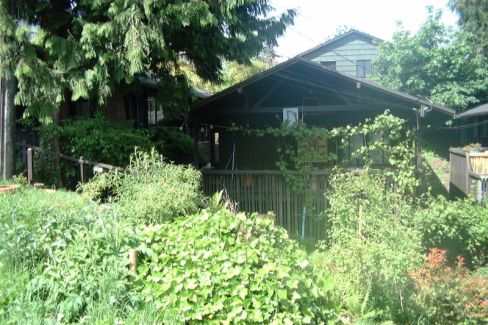
1. The studio is a shoeless one so without knocking you enter and take your shoes and coat off in the 'mud room'.
2. Then the door into the studio slides and you come in, (as long as you are not more than 5 minutes early you should come in without knocking on that door either.) and someone will show you where the bathroom is so that you can wash your hands- everyone must have clean hands before touching instruments.
3. Then we gather in circle and each child picks a song that they know and we all sing it together (so 6 kids= 6 songs) many of the songs that we sing are singing and drumming songs so everyone will get up for those songs and get drumsticks from the drumstick canister and a drum from the drum box. New students will be shown either by me or more likely by the other kids where these things are.
Then back to circle and we sit and sing and drum.
4. If no one picks a drumming song (this has happened a total of 2 times in 15 years) then I will pick one or we will do some drumming exercises ending with about 20 seconds of wild and crazy.
5. We then put the sticks and drums back and since there is a new student today will be take the piano apart day.
This is exactly what it sounds like. With sticks, our fingers and our imaginations we try to understand (at whatever stage in life we are at) how the piano works and why it makes the sounds it does.
I also introduce the ideas of high notes and low notes and loud and quiet and fast and slow (some of this we get with the drumming but for the first lesson the piano works even better), with all the parts of the piano exposed (for I do literally take much of the piano apart) we can see why the piano does what it does and this can relate to other instruments as we go through those in the coming weeks.
6. To calm everyone down the last 5 minutes of the lesson are spent in the LISTENING ROOM. Where we do just that- we sit and listen to a recording and try to hear what instruments are being played- if you know you raise your hand and tell and so we kind of learn how different instruments sound and gain a bit of experience in just sitting and consciously listening.
7. Time to get shoes and coats on- and often I will give an assignment like find something made of wood that makes a good sound, and bring it to show us all next time. For 3-5 year olds this is homework another new idea.

Back to the Table of Contents

or ctrl[cmd]+home

Fees/Tuition
All classes- individual and groups- are one hour in length. Tuition is due on the first of the month.


For private students if, due to sickness or accident, you are not able to make a lesson and I have time on another day in that same week- I will make every effort to see you for a make-up lesson.

Groups are $60.00 per month
Private lessons
14 years old and under $140.00 per month
15 years and older $160.00 per month

sound & SILENCE

For further information call
Jay Hamilton
206-328-7694
or email
musiclessons
@
soundand.com


Back to the Table of Contents

or ctrl[cmd]+home

Who am I?

I studied music composition at Fairhaven College on the campus of Western Washington University with Americole Biasini and Dr. E. LaBounty. I have attended the workshops of Kenneth Gaburo, David Mahler, Meredith Monk, and Pauline Oliveros. I studied piano for 6 years, Doublebass for 9 years, voice with Roger Nelson and Tomasa Eckert for 4+ years, and composition with Janice Giteck for 7+ years.
I began composing at the age of 9 and have written over 200 works, most of which have had public performances. They include, operas, dance/ballet pieces, and incidental music for the theatre.
Since 1973 I have been active as a composer/performer. I have worked primarily with instruments of my own design and construction, using just intonation for the basic tuning. In 1982 I formed the Quixotic String Ensemble with adults who had little musical experience, I trained them to read music and perform on my instruments. They performed regularly throughout the Northwest until 1989. From 1983-87 I was a member of, and a composer for, Gamelan Pacifica a group using instruments based on the instruments of an Indonesian orchestra.
In 1984 I was recipient of an and/or 'Support to Individual Artists' grant to build a keyed hammered dulcimer the onaip. In 1987 I received a Soundwork commission for Performa '87 Zahhak for piano, clarinet, and cello, performed by members of Cornish's New Performance Group. In 1994 I received a Jack Straw Artist Support Grant for a piece using urban sounds and acoustic instruments/voices, which resulted in The 12th*.

My works include

The 13th; a piano concerto for urban sounds and various instruments,

No Tongue*, an opera for audience participation,

Tragicall wedding, life, and death of Mathew, Margarete, and Son*, a one man opera with piano, guitar, and ycrix,

Mandala (162KB 30 minutes) a chamber orchestra piece for 10 instruments,

Tao for various chamber ensemble configurations

Cass/Andra; baseball, food and prophecy*, a chamber opera for soprano, tenor, baritone, flute,cello, toypiano and guitar [performed in the spring of 2002].

Blood: An opera* for Tenor, Soprano and speaker using electronics in place of orchestral instruments though fully scored for Orchestra and ethnic instruments. [performed September of 2005, this is available via the link below under Opera, I recommend that you read the libretto to help understand what you are listening to as there is no dialogue].

Dead Man's Piano ; a tale with music* for two singers, acoustic, electric and classical guitars, ukulele, jews harps, clackamore, frog and acoustic bass. [performed May 2006/January 2007],

Casserole* songs and sort of a musical with guitars, cello, and sax (performed 2008),

Oasis* Music for a diorama/puppet/ballet piece, [performed 2009]

Fred* A sequel to Casserole was performed 10 April 2010

Honor*The fourth music/tale this one without much dialogue so the link is to the 'songs' which we performed with minimal breaks.

Some of my work has involved audience participation and the use of non- traditional objects in traditional compositions.
I have given workshops in; instrument discovery/ construction/instruction, vocal work for actors, taught music to the deaf, and worked with/teach preschoolers to adults (using materials developed by MMCP [and others]) learning music, musical skills and expressions in my studio in the Leschi/Mt. Baker area.
[*=have received public performances]

Back to the Table of Contents

or ctrl[cmd]+home

These are links to sites and software that I use
and are pertinent to taking music lessons

Notation software


Noteworthy Composer is probably the best deal for notation that's around. It works, has great support, is inexpensive and many of my students have found that it was easy enough to use and compose with. All around, without spending 4 times as much, you can't do better. [pc only for the moment]
More of my music is accessible from a related site and can be found here.

I have begun to load various pieces either midi files or pdfs of scores/sheet music into these folders
large ensemble
lead sheets 'songs'
Opera and opera-like materials
Piano, piano duets
Reeds (clarinet and sax)
small ensemble; duets to octets
String music mostly cello and guitar some violin or vln/cel duets

Please contact me if you find any links that do not seem to work. (thank you)

Tabledit
Anything that Noteworthy doesn't do Tabledit can do - create tab and read a number of unusual formats often used in collecting folk music. The software works [it is a little trickier to use than Noteworthy composer] and adds useful tools to notation capabilities. It is inexpensive and unlike Noteworthy it's development and upgrading is timely.
Lilypond
If you are looking for a more professional looking score then Lilypond may be for you. It is not for beginners but rather for people who are copying scores or creating professional looking scores of original compositions. The output is beautiful and the learning curve is steep in the beginning and continuous as the software is always under developement.
However it is free for downloading and if you know something about notation it is easily as good as any of the expensive notation softwares I have tried.

Resources

Parentmap
a parent's resource page for the Northwest

TeachStreet
There are many instruments and methods that I do not teach or use, TeachStreet is a resource to help you find someone who may be a better fit for your needs.


Back to the Table of Contents

or ctrl[cmd]+home

Google Analytics Alternative